Federal Bureau of Investigation
Dead ShotThe Federal Bureau of Investigation functions in the novel as both the hidden investigator of Statenville’s corruption and an institution compromised by the methods it authorizes or tolerates. Its long campaign against Nathan Gold’s Cloverdale Industries depends on deep-cover agents, chemical surveillance, covert recording, and a carefully managed relationship with the press. The bureau’s eventual success exposes the drug network, but the path to that success is marked by secrecy, illegal improvisation, failed experiments, internal conflict, and an uneasy dependence on Cal Murphy’s journalism.
Origins of the Investigation
The FBI’s pursuit of the Statenville operation begins with Carmen Deangelo, a murderer whose Boston crime-scene signature was a late-nineteenth-century United States gold coin placed in a victim’s mouth. After the same signature appeared in Portland roughly twelve years after the last Boston killing, the victim’s identity transformed the case from a buried mob dispute into a national-level investigation: he was the nineteen-year-old son of United States Senator Tom Brazenworth. FBI agents recognized Deangelo’s calling card, traced his new alias, and connected him to Nathan Gold and Statenville.
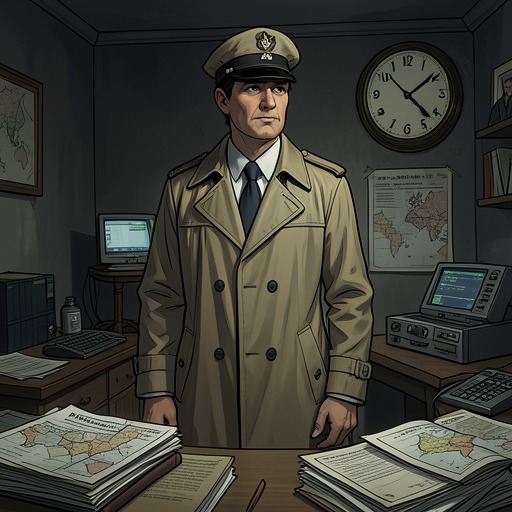
The investigation widened beyond Gold personally. Rumors in Seattle, Portland, and Salt Lake City described an Idaho town containing a drug plant capable of commercial-scale production, supported by a fleet of vehicles moving product throughout the Northwest with little detection. Once the FBI confirmed that Deangelo was operating under Gold’s identity, it placed undercover agents in Statenville to gather prosecutable evidence against the entire structure, including the people selling and transporting Cloverdale’s drugs across state lines. The bureau wanted not merely an arrest but an expansive case against Gold and everyone working with him.
Deep-Cover Operations
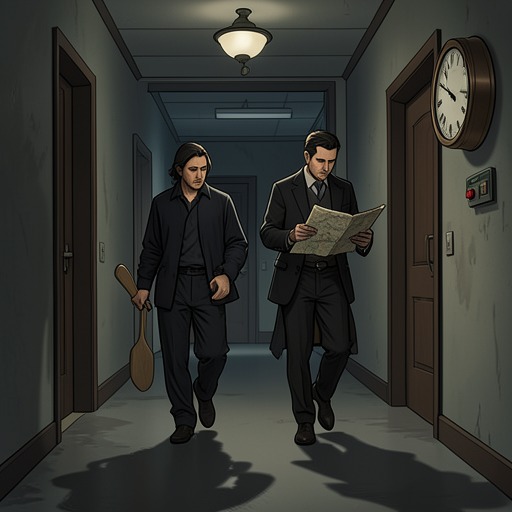
Walker and Mercer were selected for the operation because their professional records were impeccable and their histories could be traced only to identities created and vetted by the FBI. To make Gold less suspicious, both men were given fabricated backgrounds containing a few minor encounters with the law. Their cover held for five years, during which they accumulated an extensive body of information about the location and movements of Cloverdale Industries.
The operation was endangered by the very patience it required. Walker became increasingly impatient while waiting for Gold to make a mistake, and he was willing to depart from protocol, use unorthodox methods, and at times break the law to complete the assignment. His conflict with Chris Cooper illustrates the internal strain within the bureau. Cooper arrived as a special agent handling what he called an internal situation, but Dawkins found him bound with duct tape in a dark room. Cooper produced an official FBI badge when challenged, yet refused to explain his mission or answer whether Buddy Walker was the matter he was handling. The exchange leaves the bureau divided not only by competing objectives but also by distrust between its own agents.
Walker’s cover assignment was therefore not a simple operation controlled from above. When Cooper began making career-ending accusations, Walker decided that completing the case required him to exceed protocol. He wanted the assignment finished and imagined the national exposure that would follow a complete takedown of the Northwest’s largest drug cartel, even if he received no personal credit. His impatience supplied energy to the investigation, but it also pushed the operation toward dangerous experimentation and direct confrontation.
CPZ and the Ethics of Evidence
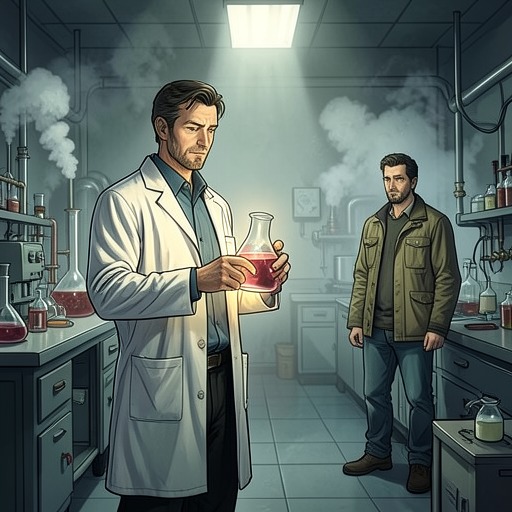
The bureau’s most troubling legacy is the CPZ marker program. Eric tells Cal that the FBI had once explored using CPZ to mark drugs, allowing unusual reactions or deaths among users to alert the Centers for Disease Control and Prevention. The resulting information could then help the FBI map the spread of a dealer’s network. In 2008, undercover operatives field-tested the method in Seattle, Los Angeles, and Phoenix by tainting individual doses. Each test ended with the drug user’s death, although the report did not specify the cause, and the program was disbanded because the publicity would have damaged the FBI.
The program’s history becomes more disturbing when Cal learns that both Walker and Mercer had participated in the testing teams. Walker later returned to the abandoned idea, tinkering with chemical formulas to tag drugs while Mercer urged him to seek another approach. The animal testing that had preceded the human trials makes the ethical failure explicit: monkeys tore at themselves and died, while dogs scratched and clawed themselves to death. Officials concluded that the idea might work in theory but lacked the ethical standard required for human testing. The novel’s evidence therefore presents CPZ not as a neutral technical device but as a discarded federal experiment whose risks re-enter Statenville through undercover improvisation.
When Cal and Kelly discover a suspicious bottle, Cal pours some of its contents onto the floor so Kelly can photograph it. He admits that the image may not prove anything, but believes it could be enough to interest federal investigators. The moment captures the bureau’s dependence on material evidence while also showing the limits of what a photograph can establish. The journalists are trying to create the lead that will make federal action possible; the FBI, in turn, needs the journalists’ evidence to move from suspicion toward a case that can survive scrutiny.
Conflict with Statenville’s Power Structure
Gold recognizes that an FBI agent inside Cloverdale Industries represents a threat beyond the ordinary intruders he has previously intimidated with guns, money, or the prospect of disappearance in a secluded quarry. He had imposed rigorous background checks on employees and explained at closed corporate gatherings that exposure would cost them their paychecks and send them to federal prison. Walker nevertheless passed as an innocent basketball coach seeking extra hours to support his elderly mother. Gold’s security system was built to identify ordinary risks, not an agent whose entire biography had been manufactured by the bureau.
The FBI’s presence also alters the meaning of the town’s secrecy. Gold had relied on local compliance, paid silence, and the belief that Statenville’s prosperity depended on Cloverdale Industries. The bureau’s undercover operation threatens every layer at once: production, transportation, local protection, and the political justification that the conspiracy serves the town’s common good. Mercer’s knowledge of the Statenville Sheriff’s Department gives the infiltrators access to the town’s security procedures and eventually to its greatest secret. He and Walker then resolve to expose the operation and end Statenville’s role as a major Pacific Northwest drug center.
The Final Operation and Public Exposure
By the confrontation at Cold River Canyon, the FBI has moved from patient infiltration to tactical intervention. After meeting Cal and Kelly, the bureau flies a sniper and a full tactical team to a position overlooking Gold’s favored dumping ground. The team uses Kelly’s iPhone to record events discreetly, a fact unknown to the opposing side, while an open line allows the agents to respond to what is happening in real time. The recording is important because it preserves the confrontation rather than leaving the bureau dependent on competing accounts.
The operation also reflects uncertainty inside the bureau. Officials suspect that Mercer may be the mole, and Mercer’s motives remain unclear even as events unfold. Their original plan assumes that Gold’s confession alone might not withstand legal challenge; if both Gold and Mercer survived, an admission could later collapse in court. The bureau instead counts on a revealing news story to force Gold into a desperate move that can be captured and acted upon. That contingency becomes unnecessary when Gold kills Mercer and then leaps into the canyon, eliminating the need to manufacture a further opening.
Afterward, Cal asks the FBI’s Salt Lake City field office to delay announcing Carmen Deangelo’s death and the seizure of Cloverdale Industries until morning. He argues that his article will expose the operation without demonizing Walker. The officials agree after negotiating the details, partly because Cal risked his life. The decision gives journalism a final role in the federal operation: the bureau supplies the institutional force and evidence, but Cal’s exclusive is intended to shape the public account of what happened. The next day, his story appears in two newspapers, turning a clandestine investigation into a public record.
Significance and Contradictions
The Federal Bureau of Investigation represents the possibility of federal accountability in a town where local authority, business, and organized crime have fused. Yet the bureau is not presented as morally uncomplicated. It creates false identities, conducts deep-cover operations, withholds information from allies, revives a marker concept tied to lethal trials, and tolerates agents who use illegal methods when conventional procedure stalls. Its pursuit of evidence repeatedly collides with the secrecy required to obtain it.
That contradiction gives the bureau its narrative force. Local officials insist that the three deaths are simple drug overdoses and that suspicion is not evidence, while the FBI works beneath the official story for years. The local newspaper is pressured to produce harmless reaction pieces, and Cal is warned by anonymous actors to keep quiet, but the federal investigation eventually makes those barriers useful rather than decisive: photographs, undercover access, recorded testimony, and a national newspaper story converge. The bureau defeats Statenville’s information control, but it does so through another controlled information system of its own. Its victory is therefore both an exposure of institutional corruption and a reminder that truth in the novel becomes publicly effective only when investigative reporting and federal power finally reinforce one another.